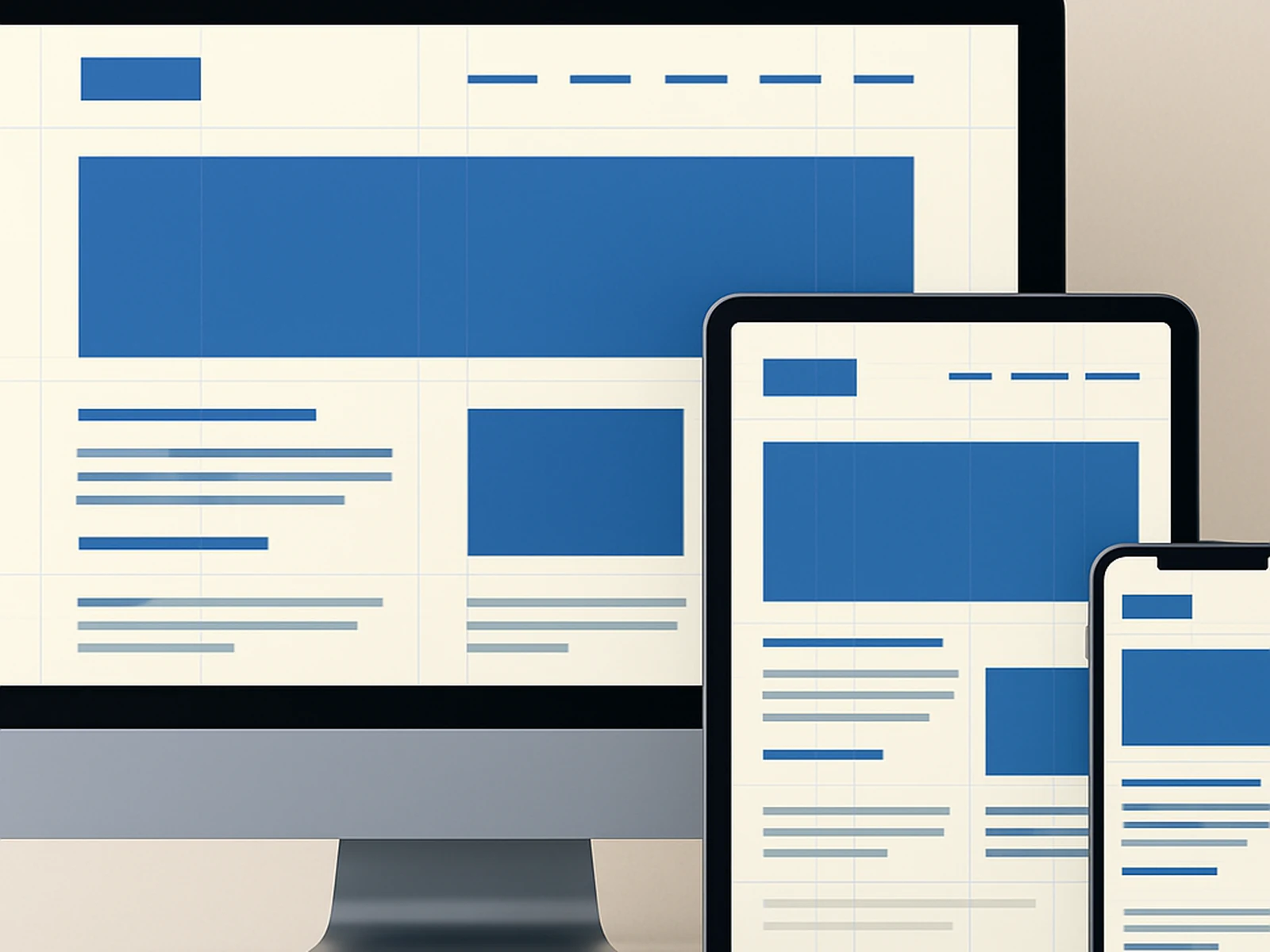
A web page that only works on desktop is not really finished. This course covers the techniques that make a layout adapt intelligently to every screen size: media queries, responsive images, fluid typography, and the viewport meta tag.
Mobile-first is the correct approach, and this course explains why. You design for the smallest screen first and add complexity as the screen gets larger. This produces better code, faster load times, and more maintainable stylesheets.
The course includes in-depth coverage of responsive images: srcset, sizes, and the picture element. Images account for most of the file size on most web pages, and loading the right image for the right screen is a skill many developers never learn properly.
We also cover modern CSS tools that make responsive design significantly easier: CSS custom properties (variables), calc(), clamp() for fluid typography, container queries, and CSS logical properties. This is the current state of responsive CSS, not techniques from 2015.
Course curriculum
What is included
Delivery: Immediate access. Recommended after HTML & CSS Foundations.
Student feedback
"The mobile-first methodology section changed how I write CSS. Everything is cleaner now."